
The Hearth Health Issue
Hello!
What’s one of the most important—and overlooked—aspects of women’s health? The heart. Just how badly overlooked? Well, Heart Health Month is February, and I’m discussing this in March!
Unfortunately for us women, though, the humor stops there.
Fact: Cardiovascular disease remains the number one cause of death in women, responsible for 1 in 3 deaths each year.
Even more sobering fact: Only about half of women realize that heart disease is their greatest health threat.
Many of us still believe cancer poses the greatest risk, while cardiovascular disease claims more lives than all forms of cancer combined. If you are like many women, you may spend much of your time caring for others—children, partners, aging parents, coworkers—often placing your own health last. This month, I invite you to shift that perspective. Prioritizing your heart health is essential for your longevity and quality of life. And your actions set a powerful example for the women around you.
—Dr. Sogol Jahedi
Heart Disease at Any Age
Heart disease and stroke do not occur only later in life. They can affect women at any age, making awareness and prevention our job throughout adulthood. Nearly 45% of women aged 20 and older live with some form of cardiovascular disease. Fewer than half of women enter pregnancy with optimal heart health.
Certain life stages uniquely influence a woman’s cardiovascular risk. Pregnancy, for example, is often described as a “natural stress test” on the heart. Conditions like high blood pressure, preeclampsia and gestational diabetes may resolve after delivery, but they significantly increase your risk of developing heart disease, high blood pressure and/or diabetes later in life. In fact, cardiovascular disease is the top cause of death in new mothers and accounts for over one-third of maternal deaths, with Black women experiencing disproportionately higher risk.
Clearly, we can’t dismiss heart disease as a concern for later years.
Menopause: A Critical Window for Prevention
Menopause itself does not cause heart disease, but the years leading to it and following represent a pivotal time for cardiovascular health. That’s because risk factors often accelerate then. As estrogen levels drop, blood vessels may become less flexible, and cholesterol can begin to accumulate more readily in the arteries.
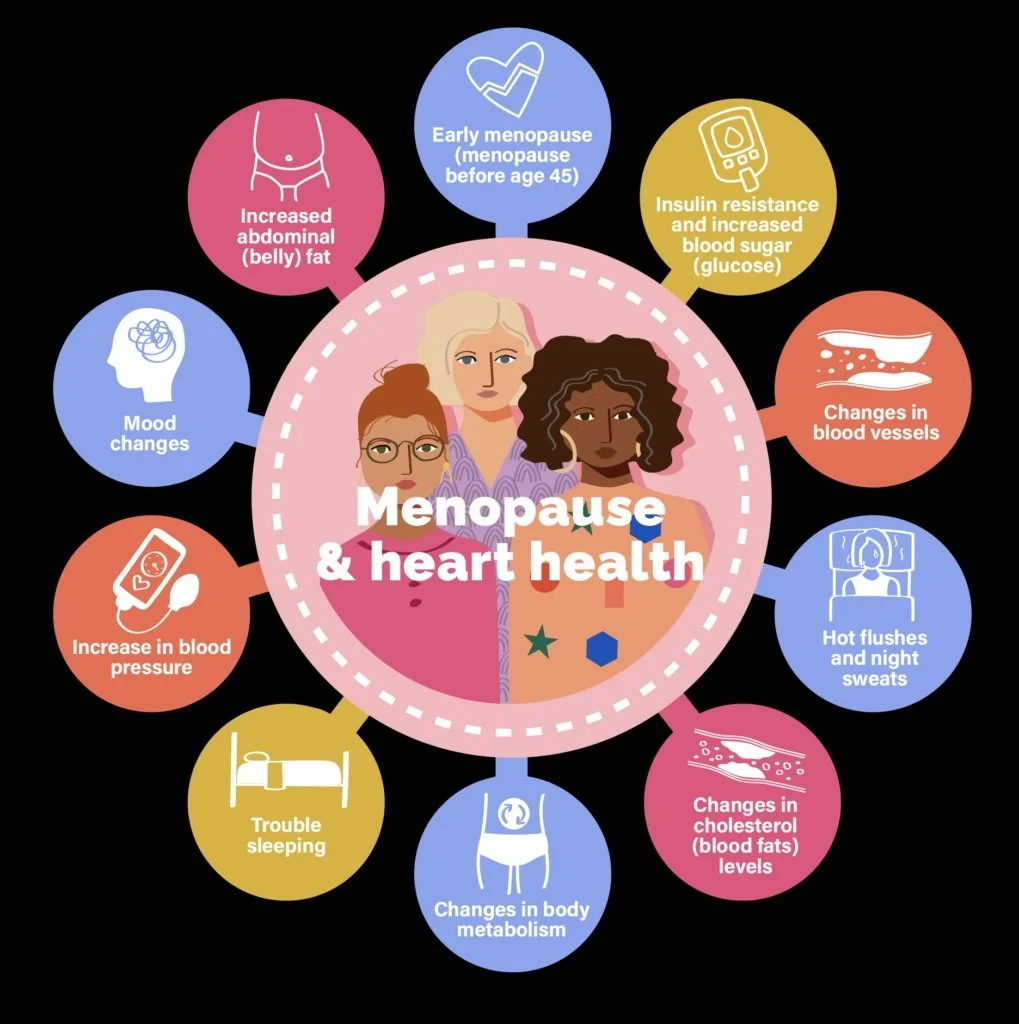
Women who experience early menopause (before age 40) or menopause related to surgical removal of both ovaries at a young age face a higher risk of coronary heart disease. Common menopausal symptoms like hot flashes and night sweats, which can persist for many years, have also been associated with less favorable cardiovascular risk profiles.
The takeaway? I recommend you see midlife as a powerful opportunity to reassess habits, address emerging risk factors, and establish a prevention-focused plan that supports long-term heart health.
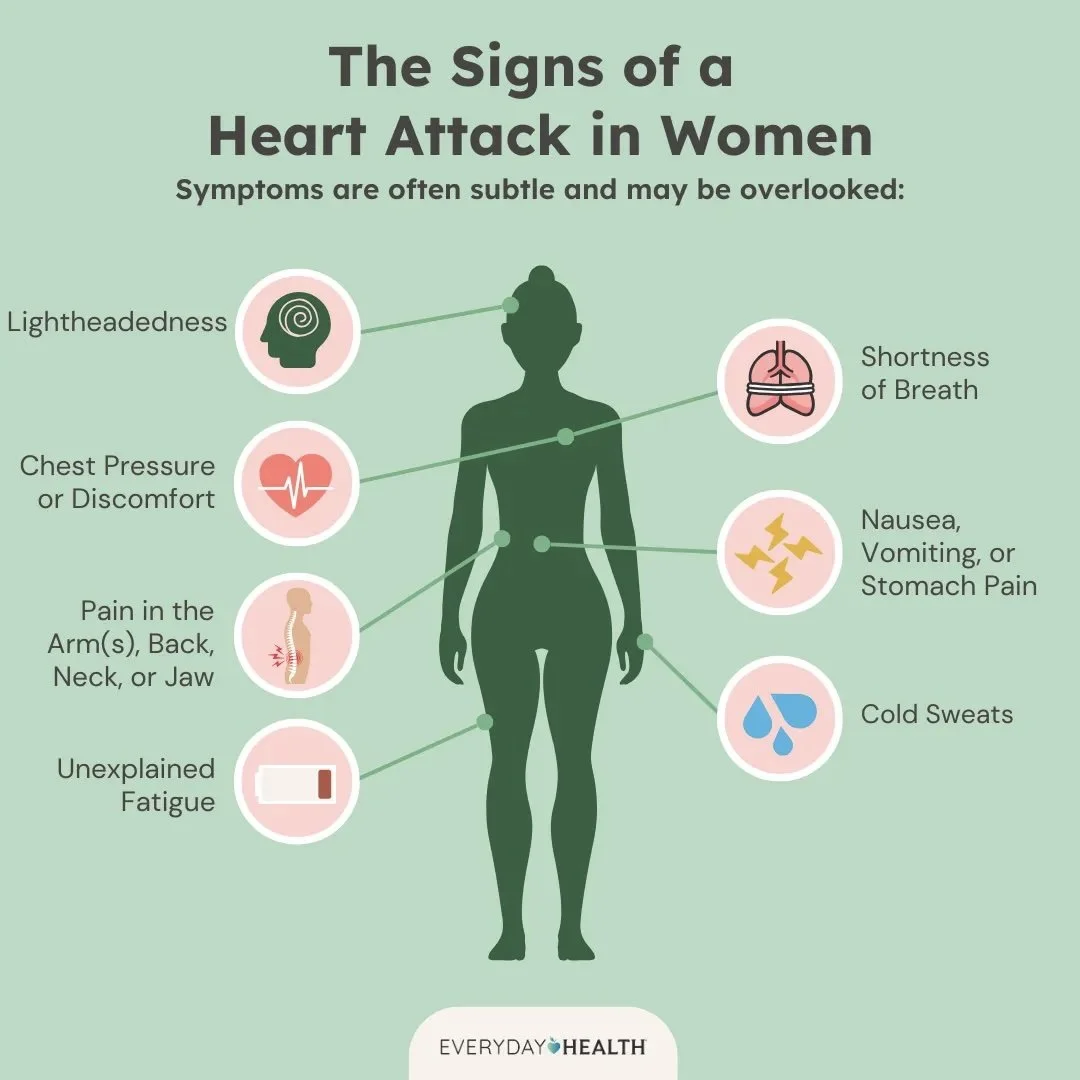
Sneaky Symptoms: Heart Attacks Look Different in Women
We have all been conditioned to think of crushing chest pain as the hallmark sign of a heart attack. While chest pain remains the most common symptom, women often experience additional or subtler warning signs, which may delay diagnosis and treatment. Recognizing these signs—and acting fast—can be lifesaving.
Blood Pressure, Cholesterol and Stroke Risk
High blood pressure, often called the “silent killer,” plays a major role in women’s heart health. More than 45% of US women have high blood pressure or take medication to control it, yet fewer than 1 in 4 women with hypertension have it adequately managed. Black women are particularly affected, with nearly 60% living with hypertension.
Stroke risk, too, disproportionately impacts women. Although millions of women are living as stroke survivors, nearly 58% of stroke-related deaths occur in women. Improving awareness, access to care and prevention strategies remains essential.
Cholesterol is another key factor. While cholesterol is needed for hormone production and cell health, excess LDL (“bad”) cholesterol contributes to plaque buildup in the arteries, increasing the risk of heart attack and stroke. HDL (“good”) cholesterol helps remove excess cholesterol from the bloodstream, offering some protection. Triglycerides—another form of fat—can further elevate risk when combined with high LDL or low HDL levels.
Prevention: Small Steps, Big Impact
The encouraging news is that most heart disease and stroke events are preventable. Education, lifestyle changes and proactive medical care make a big difference!
“Lifestyle changes” covers a lot of ground. Intimidating? Instead of thinking that you need to “change everything,” focus on specific, doable actions. The American Heart Association breaks down those changes to eight areas:
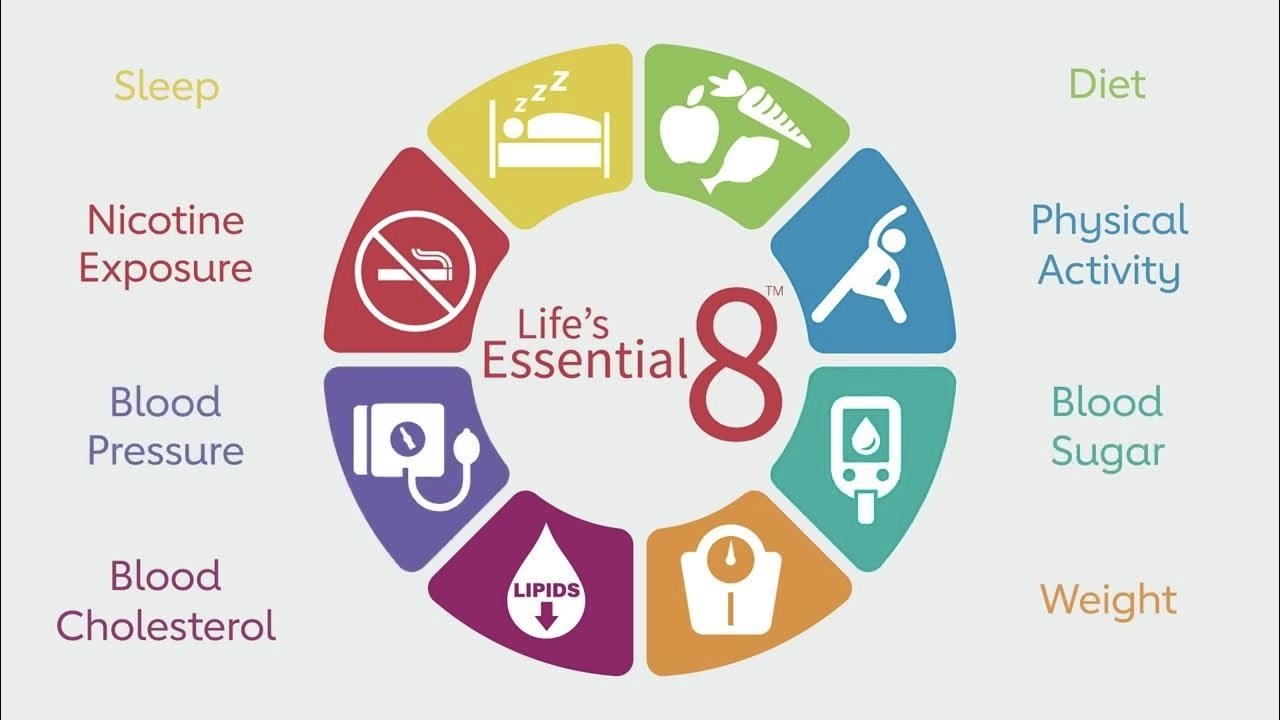
Here, “diet” refers to heart-healthy foods. “Sleep” means getting enough rest—and good quality, too. “Physical activity” should be a mix of cardio and weight-bearing.
Think of your own life and focus on just a few changes at a time. Start with the low-hanging fruit. That’s heart-healthy, after all!
Don’t Skip Screening
Along with lifestyle changes, routine screening is a cornerstone of prevention. That’s what we mean by “proactive care” or simply routine screening. For women, we recommend:
Blood pressure: At every healthcare visit or at least annually
Cholesterol: Every 4–6 years for average-risk adults; more often if risk is elevated. You’ll note that for many of you, we check this annually!
Blood glucose: At least every 3 years starting at age 45, or earlier if risk factors are present. This is another lab test that I believe in checking annually.
Weight and BMI: At regular visits
Lifestyle discussions: Nutrition, physical activity, smoking and stress at each visit.
Together, these measures allow for early identification of risk and timely intervention.


Greta’s Corner
Hello, A.G. members! Some updates from your office manager…
Medical questions? Just call. But for handy info on things like cervical health, estrogen guidelines and menopause, also check out Dr. Jahedi’s posts on Instagram and Facebook. We even tried to make Pap smears funny! Did we succeed? You be the judge.
By now, you should have received an invite to our new patient portal, FollowMyHealth, which replaces Patient Fusion. Questions? Please reach out. Once the kinks are ironed out, we think this portal will be an upgrade, putting your medical records and self-scheduling options in one place. There’s also an app version if you prefer.
New 2026 insurance? If you don’t see Dr. Jahedi listed as a provider, check for “Advanced Gynecology” or search using her NPI number (1922265701).
If you cancel an appointment, please give us 24–48 hours’ notice. We don't charge a cancellation fee because we understand things happen. Still, your early notice lets us offer time to someone who may have an urgent need to be seen. Thanks!

A Member Writes
I have been a patient since 2021, and I continue to be impressed. … Dr. Jahedi consistently gives her full attention during appointments, listens carefully to my concerns, answers all questions thoroughly, and never makes me feel rushed. The team goes above and beyond. Her medical assistant, Tommie, coordinated lab work with another physician’s office to save me a separate trip and ensured that all results were properly shared. This attention to detail is rare.
—Stephanie H., patient
We’re grateful for Stephanie and all of our patients! If you’d like a doctor who takes time to listen and an office that works to make your life easier, learn below how to join Advanced Gynecology.